
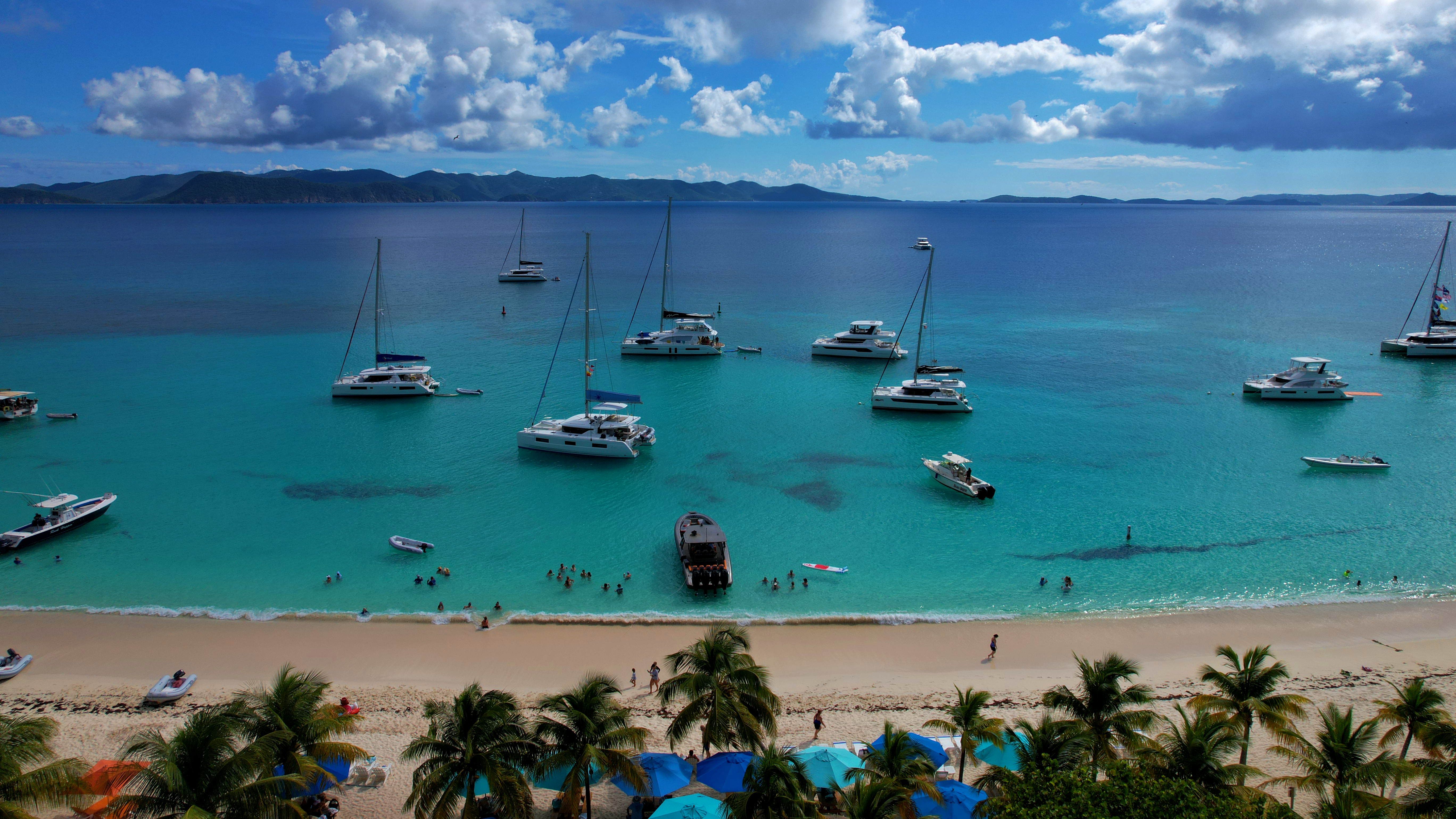
Why the Virgin Islands Are Perfect for Island Hopping
The US and British Virgin Islands are uniquely suited for island hopping. The seven primary islands — all connected by multiple ferry operators, with crossings ranging from 20 to 90 minutes. Unlike most Caribbean destinations where inter-island travel means expensive flights, here you just walk onto a ferry. Each island has its own character, from the lively bars of Jost Van Dyke to the pristine national park beaches of St. John to the coral reefs of Anegada.
Geographically, the Virgin Islands are two separate territories sitting side by side. The US Virgin Islands (St. Thomas, St. John, and St. Croix) are an unincorporated US territory — no passport needed for American citizens, US dollars accepted everywhere, and your cell phone works just like it does stateside. The British Virgin Islands (Tortola, Virgin Gorda, Jost Van Dyke, and Anegada) are a British Overseas Territory with their own immigration, customs, and a distinctly different vibe. The closest islands in each group are separated by just a few miles of water, making border crossings quick and routine.
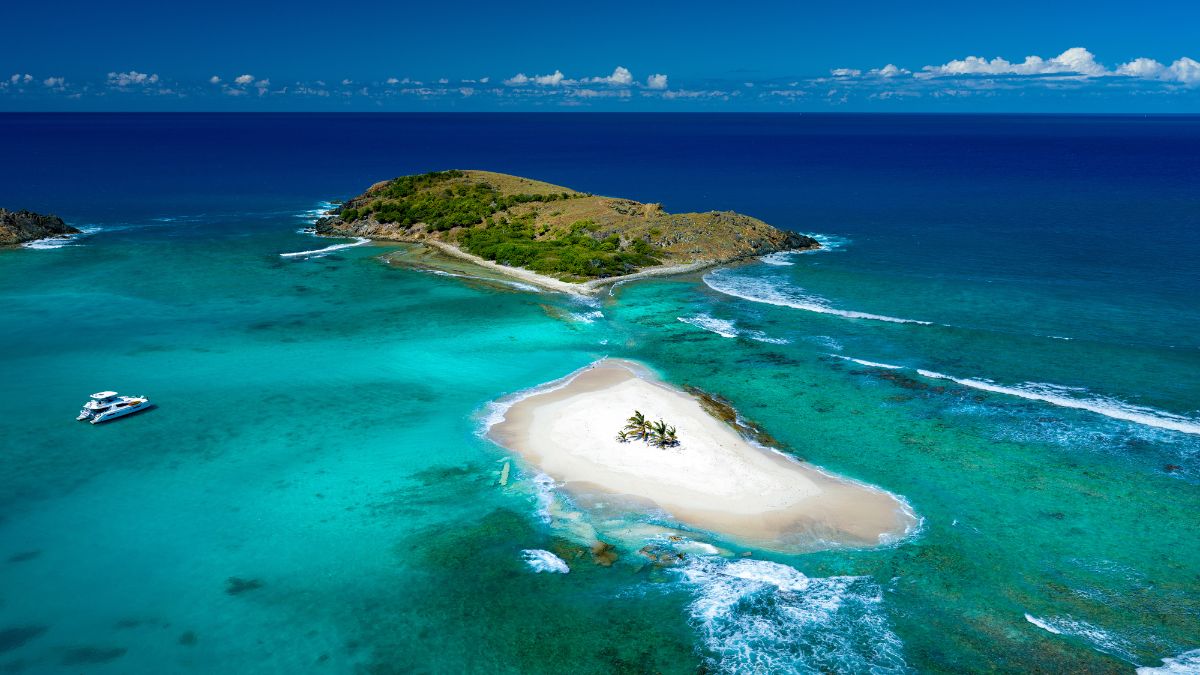
Multiple independent ferry operators connect these islands — including Speedy's, Smith's Ferry, Road Town Fast Ferry, and others — running more than a dozen routes between the islands. Some are US-based, some BVI-based, and each has its own schedules and ticketing. The busiest routes (like the Red Hook to Cruz Bay ferry) run every hour. Even less-traveled routes like the Tortola to Anegada ferry run multiple times per week.
Why ferries over flights? For starters, there are almost no inter-island flights in the Virgin Islands — the geography doesn't demand them when every crossing is under 90 minutes by boat. Ferries are also dramatically cheaper ($25-70 vs. $150+ for the few charter flights that exist), and you skip the overhead of airport security, check-in windows, and baggage claim. Walk up to a dock, buy a ticket, and you're on the water in minutes. The rides themselves are part of the experience — turquoise water, island silhouettes, and the occasional dolphin sighting.
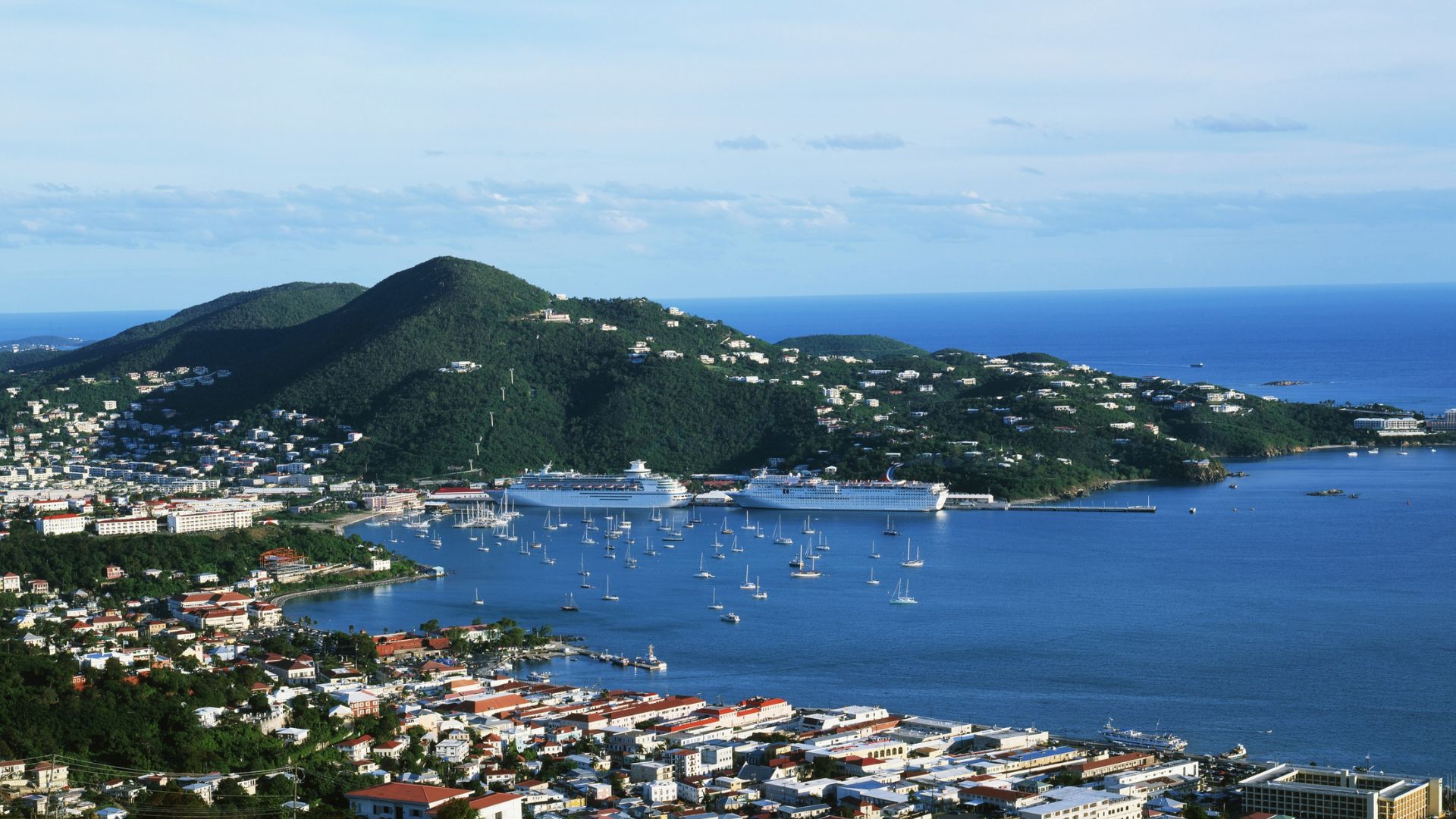
The two-territory setup is what makes island hopping the Virgin Islands genuinely interesting. In the USVI, you get familiar American conveniences — chain restaurants in Charlotte Amalie, well-maintained national park trails on St. John, rental cars on paved roads. Cross over to the BVI and the pace slows down. Beach bars outnumber restaurants. Goats wander the roadside. The rum drinks get stronger. You feel like you've traveled to a different part of the world, but you're only 45 minutes from where you started.
The Primary Islands at a Glance
Each with its own personality
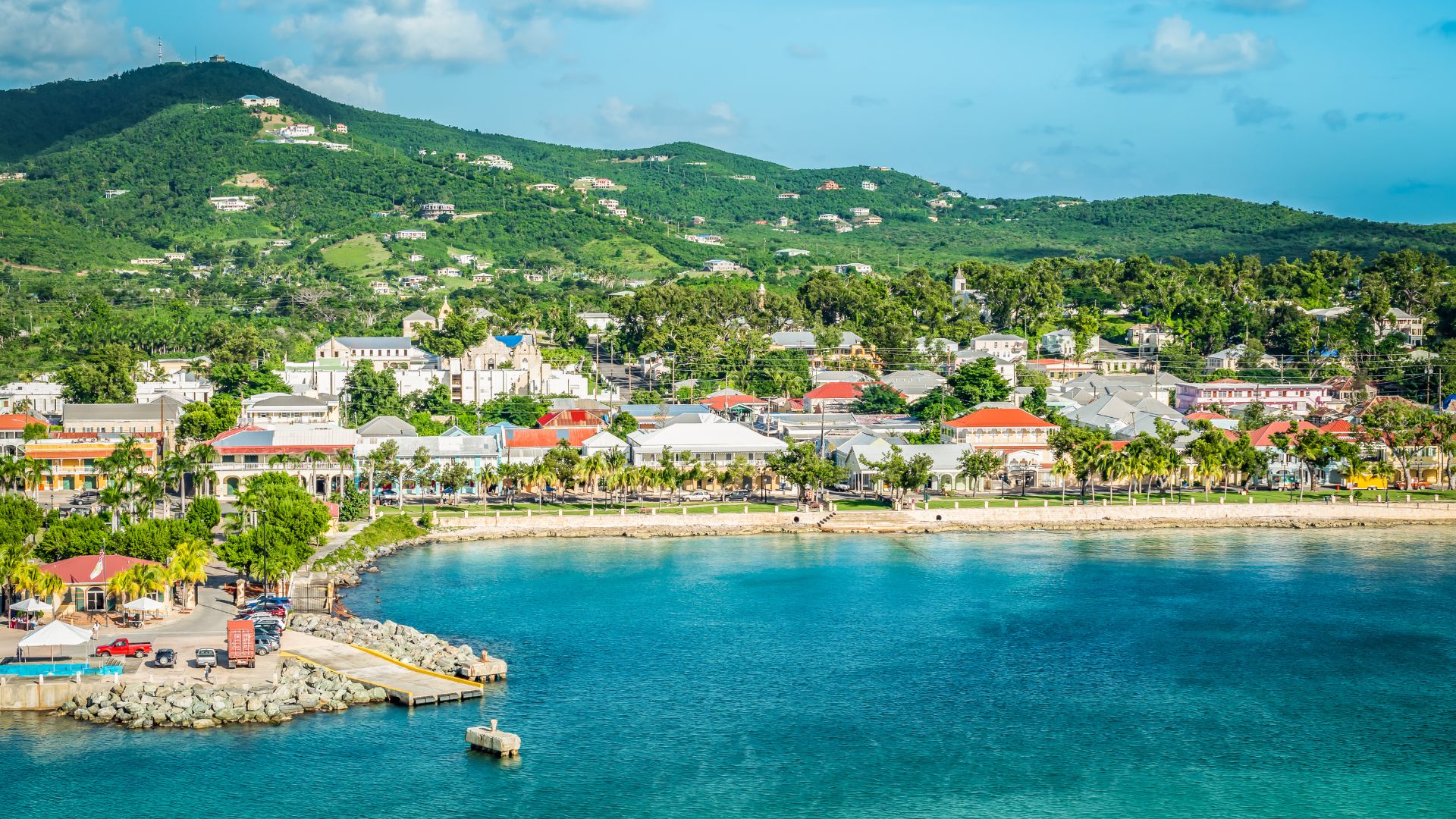
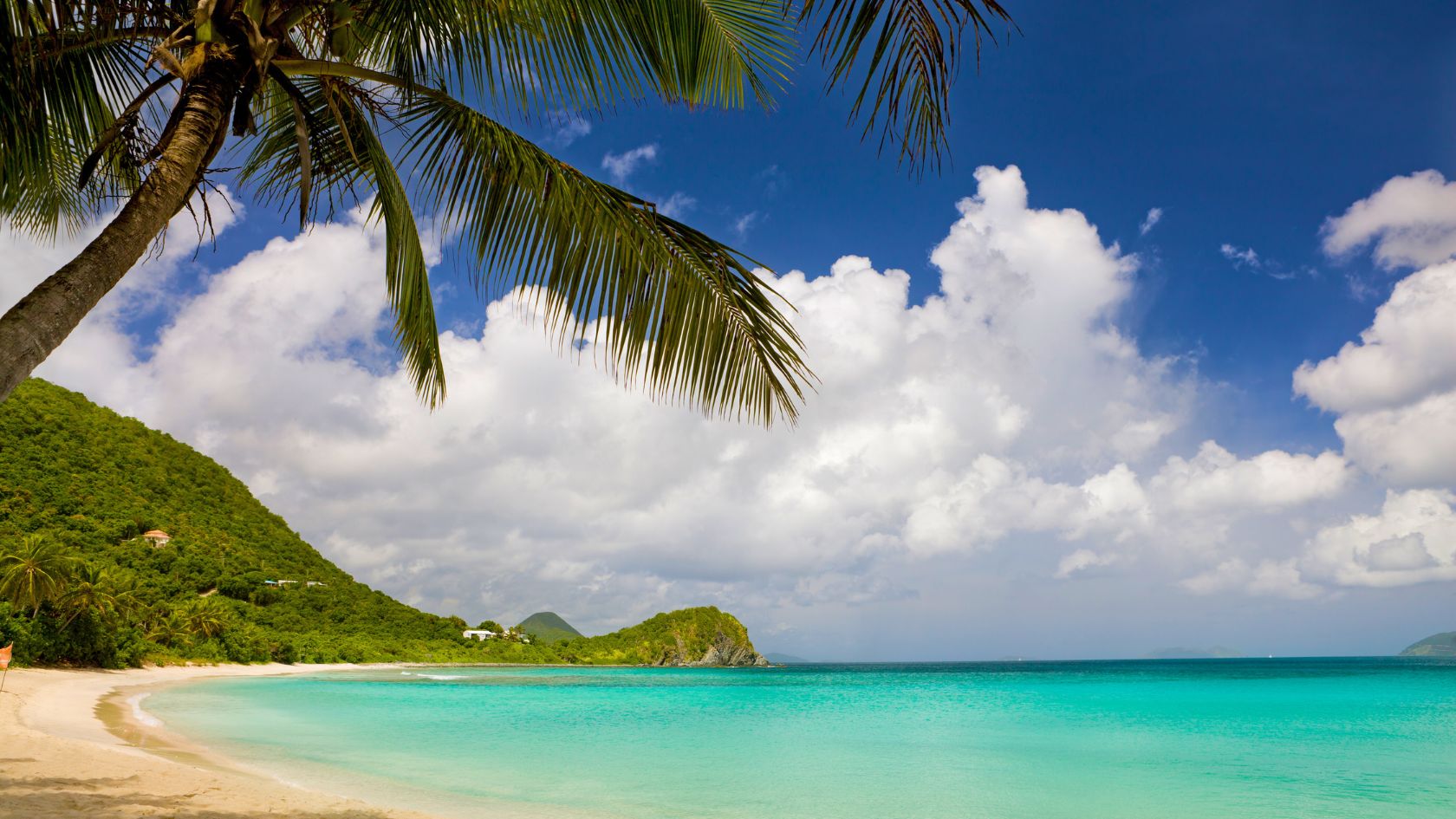
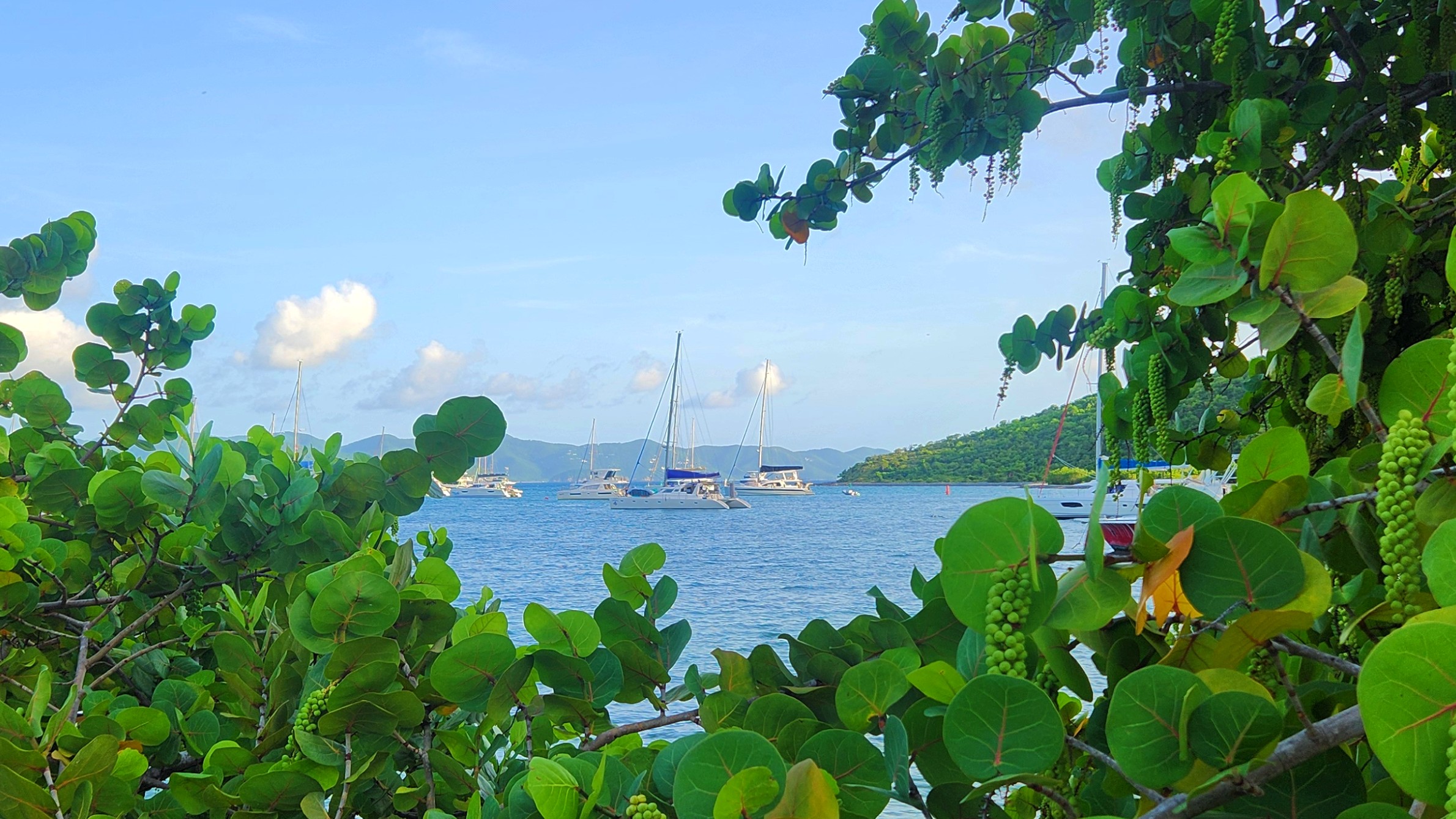
Sample Island Hopping Itineraries
Realistic itineraries based from St. Thomas
3-Day Getaway
Passport OptionalSt. Thomas + one day trip
Day 1
Arrive St. Thomas. Settle in at your hotel or villa. Head to Magens Bay for an afternoon swim or just relax after traveling.
Day 2
Day trip: St. John (20 min, no passport) for beaches and national park, or Jost Van Dyke (50 min, passport required) for beach bars and a laid-back BVI vibe. Catch the afternoon ferry back.
Day 3
Beach day on St. Thomas — hit Coki Beach for snorkeling or explore Charlotte Amalie's shops and waterfront. Or do your second day trip if you didn't get to it yesterday.
5-Day Explorer
Passport RequiredUSVI + BVI
Day 1
Arrive St. Thomas. Settle in at your villa or hotel. Magens Bay or Coki Beach if you have energy, or just decompress.
Day 2
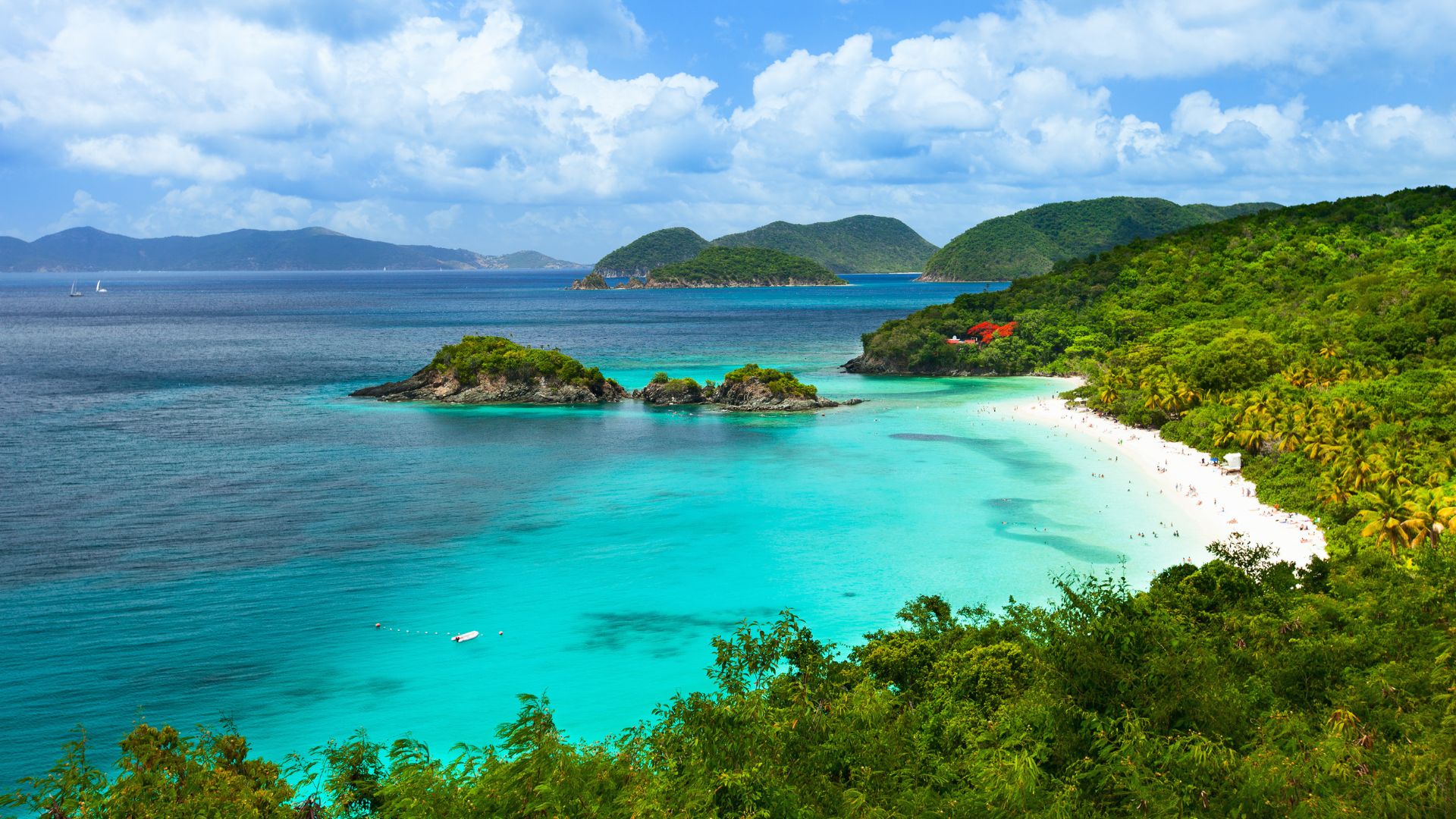
Day trip to St. John (20 min from Red Hook). Trunk Bay in the morning, lunch in Cruz Bay, Maho Bay in the afternoon. No passport needed.
Day 3
Beach day on St. Thomas. Hit Coki Beach for snorkeling, explore Charlotte Amalie's shops and waterfront, or relax at your villa.
Day 4
Day trip to Jost Van Dyke (50 min from Red Hook). White Bay beach bars — Soggy Dollar, Ivan's Stress Free. Lunch at Foxy's in Great Harbour. Passport required.
Day 5
Last full day. One more beach, some shopping, or revisit your favorite spot. Make the most of it.
Week-Long Trip
Passport RequiredUSVI + BVI
Day 1
Arrive St. Thomas. Settle in at your hotel or villa. Take it easy — unpack, hit the pool, grab dinner somewhere local.
Day 2
Beach day on St. Thomas. Magens Bay in the morning, Coki Beach in the afternoon for snorkeling. No ferry needed — just enjoy the island.
Day 3
Day trip to Jost Van Dyke (50 min from Red Hook). Passport required. White Bay beach bars — Soggy Dollar, Ivan's Stress Free Bar. Lunch at Foxy's in Great Harbour. Catch the afternoon ferry back.
Day 4
Rest day. Sleep in, relax at your villa or hotel, explore Charlotte Amalie's shops, or find a quiet beach on St. Thomas you haven't tried yet.
Day 5
Day trip to Virgin Gorda. Ferry to Tortola, connect to Virgin Gorda. The Baths in the morning, lunch at Coco Maya. This is the longest day — leave early and return through Tortola in the evening. Passport required.
Day 6
Day trip to St. John (20 min from Red Hook). Trunk Bay, Maho Bay, lunch in Cruz Bay. No passport needed. The ferry runs every hour so take your time.
Day 7
Last full day. One more beach, a sunset somewhere special, or revisit your favorite spot from the week.
How Island Hopping by Ferry Works
Everything you need to know before you go
Buying Tickets
Most ferry tickets in the Virgin Islands are purchased at the terminal on the day of travel. Walk up to the ticket window, tell them where you're going, pay, and board. No advance reservation is needed for most routes. A few operators — notably Speedy's and Road Town Fast Ferry — offer online booking, which can be convenient during peak season (December-April) when popular routes occasionally fill up. For the Red Hook to Cruz Bay ferry, tickets are sold on a first-come, first-served basis at the dock and it almost never sells out.
What the Terminals Are Like
Terminal experiences vary. Red Hook on St. Thomas is an open-air dock with a ticket booth and a small waiting area. Charlotte Amalie has a larger, more formal terminal building with customs and immigration facilities for BVI-bound ferries. Road Town on Tortola has an air-conditioned terminal with immigration processing, a small shop, and a taxi stand outside. The smaller terminals — West End (Tortola), Cruz Bay (St. John), Great Harbour (Jost Van Dyke) — are basically a dock with a ticket counter. Arrive 30 minutes early for cross-border routes (USVI to BVI or vice versa) to clear customs. For domestic routes within the same territory, 10-15 minutes is plenty.
Luggage
There's no checked luggage system on VI ferries. You carry your bags on and off the boat yourself. Crew members will sometimes help stow larger bags on a rack or in a forward compartment, but don't count on it. A rolling carry-on and a backpack is the sweet spot. Avoid full-size suitcases if you can — you'll be wrestling them up and down narrow gangways and across docks. For day trips, a small daypack with water, sunscreen, and a towel is all you need.
Cell Phones & Roaming
Your US cell phone works normally in the USVI — same rates, same data, no roaming. The moment you cross into the BVI, you're on international roaming. Most US carriers charge $10/day for international access, and some plans don't cover BVI at all. Enable airplane mode and use Wi-Fi at restaurants and hotels to avoid surprise charges. Consider downloading offline maps before your trip.
Cash vs. Cards
The US dollar is the official currency in both the USVI and BVI. Credit cards are accepted at most ferry terminals, restaurants, and shops on the larger islands. However, smaller establishments in the BVI — especially beach bars on Jost Van Dyke and taxis everywhere — are cash-only. There's no ATM on Jost Van Dyke or Anegada. Bring at least $100 in small bills for each BVI island day.
Passport & Border Crossings
The USVI-BVI border is the only passport checkpoint in the island chain. Within the USVI (St. Thomas, St. John, St. Croix), no passport is needed for US citizens. Within the BVI (Tortola, Virgin Gorda, Jost Van Dyke, Anegada), once you've cleared BVI immigration, you can ferry between BVI islands without additional customs checks. The border crossing adds 10-30 minutes to your trip. You'll also need to complete the BVI Online ED Card before arrival. Read our full BVI passport & entry requirements guide.
Ferry Costs
What to expect for ferry fares and associated fees
| Route Type | One-Way Fare | Examples |
|---|---|---|
| USVI domestic ferries | $7-15 | Red Hook-Cruz Bay, Charlotte Amalie-Cruz Bay |
| USVI-BVI cross-border ferries | $30-55 | St. Thomas-Tortola, St. Thomas-JVD |
| BVI domestic ferries | $15-35 | Tortola-Virgin Gorda, Tortola-JVD |
| USVI departure fee | $10/person | Paid when departing USVI for BVI |
| BVI departure tax | $20/person | Paid when departing BVI |
Which Island Should You Visit First?
Your first island depends on what you're looking for
St. John
Families, snorkelers, hikersThe easiest day trip. 20 minutes from Red Hook by ferry, no passport needed, and Trunk Bay alone is worth the trip.
Ferry schedules
Tortola
First-time BVI visitorsThe BVI hub with the best beaches (Cane Garden Bay, Smuggler's Cove) and connections to every other BVI island.
Ferry schedules
Jost Van Dyke
Couples, groups, fun seekersWhite Bay and the Soggy Dollar Bar are bucket-list Caribbean. A legendary beach bar day.
Ferry schedules
Virgin Gorda
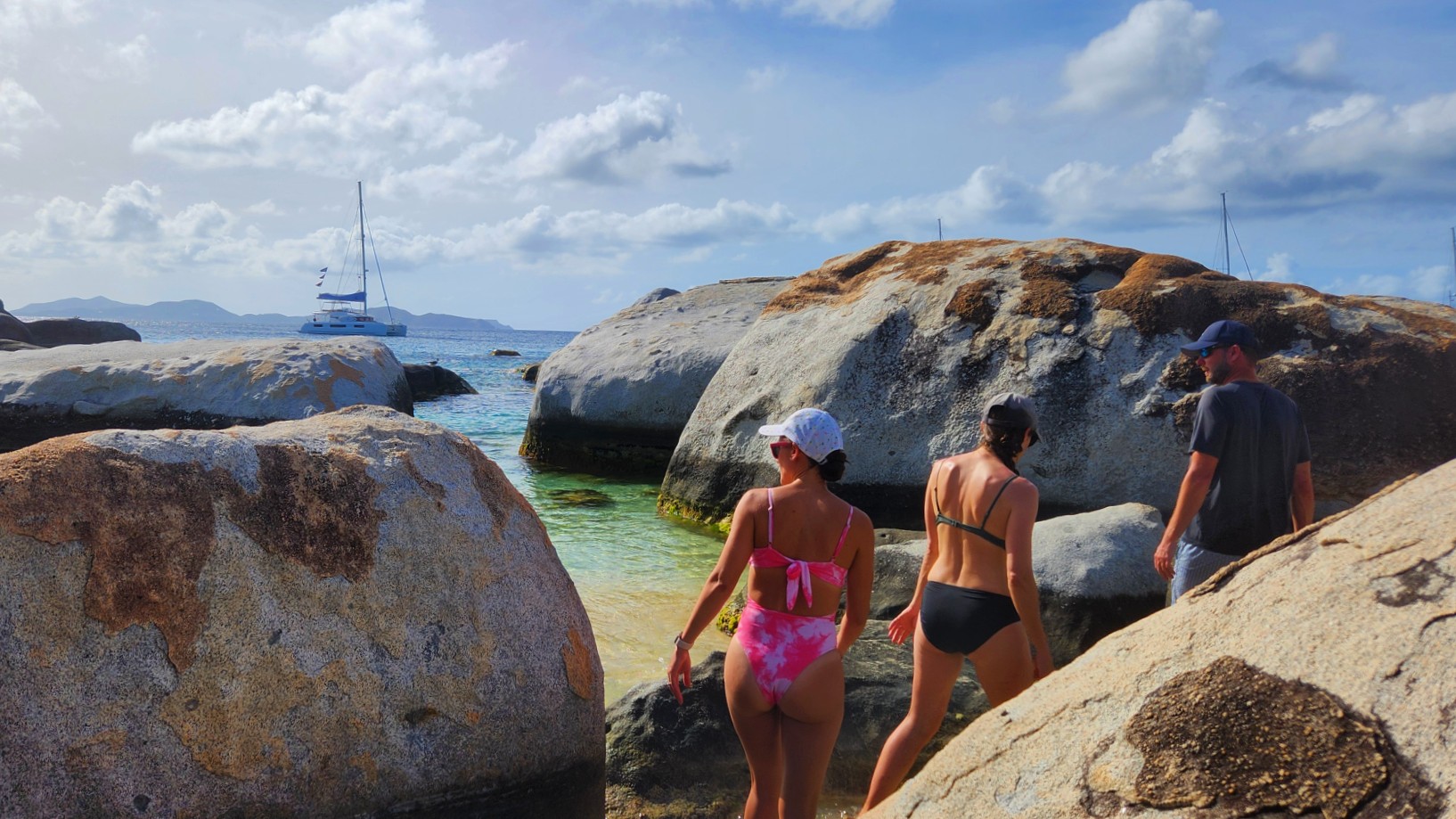
Adventurers, photographersThe Baths are unlike anything else in the Caribbean. Giant granite boulders forming sea-level caves and tidal pools.
Ferry schedules
St. Croix
Experienced travelers, diversFewer tourists, better diving, more local culture, and the Cruzan Rum distillery. Off the beaten path.
Ferry schedules
Anegada
Seclusion seekers, foodiesFlat coral island, empty beaches, fresh lobster, and a pace of life that feels like the Caribbean of 30 years ago.
Ferry schedulesFrequently Asked Questions
Common questions about island hopping the Virgin Islands
Can you island-hop in the Virgin Islands by ferry?
Yes. The US and British Virgin Islands have multiple ferry operators connecting the primary islands. Crossings range from 20 minutes (Red Hook to Cruz Bay) to 90 minutes (St. Thomas to Virgin Gorda). Most visitors base themselves on St. Thomas and take day trips by ferry to the other islands.
Do you need a passport to island-hop in the Virgin Islands?
Only if you're crossing between the USVI and BVI. Travel within the USVI (St. Thomas, St. John, St. Croix) requires no passport for US citizens. Crossing to any BVI island (Tortola, Virgin Gorda, Jost Van Dyke, Anegada) requires a valid passport.
How many islands can you visit in a week in the Virgin Islands?
Realistically, 3-4 islands in a week is comfortable. Most visitors base on St. Thomas and do day trips — St. John and Jost Van Dyke are easy day trips, and Virgin Gorda is doable but a longer day. Trying to hit every island in a week means you're spending more time on ferries than on beaches.
What is the best island to base yourself for island hopping?
St. Thomas is the best base if you want access to both USVI and BVI islands — it has three ferry terminals (Red Hook, Charlotte Amalie, Crown Bay) with routes to every major island. Tortola (Road Town) is the best base if you're focused on BVI islands.
How much does it cost to island-hop the Virgin Islands?
Ferry fares range from $7-15 for USVI domestic routes to $30-55 for cross-border routes to the BVI. Additional fees include a $10 USVI departure fee and $20 BVI departure tax per person when crossing the border.
Is island hopping safe in the Virgin Islands?
Yes. The Virgin Islands are one of the safest island-hopping destinations in the Caribbean. The ferries are well-maintained commercial vessels operating on established routes. The main safety considerations are standard travel precautions: wear sunscreen, stay hydrated, watch your belongings at busy terminals, and check ferry schedules in advance so you don't get stranded.
What's the best time of year for island hopping in the Virgin Islands?
December through April offers the best weather — low humidity, calm seas, and almost no rain. Ferry schedules run at full frequency during high season. May through November is hurricane season with higher humidity and occasional rough seas that can cause ferry cancellations, but fares and accommodation are cheaper. The shoulder months of May and November are a good compromise.
Tips for Island Hopping the Virgin Islands
Check schedules in advance. Some routes (Tortola to Anegada, St. Thomas to St. Croix, St. Thomas to Virgin Gorda) don't run daily. Plan your itinerary around ferry availability.
Book BVI-bound ferries early in the day. Morning crossings let you maximize time on the island and ensure you catch a return ferry.
The US dollar is used in both the USVI and BVI. No currency exchange needed.
Pack light. You'll be carrying your luggage on and off ferries. A backpack or small duffel works best.
Airplane mode in the BVI. BVI cell towers will roam your US phone at international rates. Use airplane mode and connect to Wi-Fi when available.
Budget for extras. Beyond ferry tickets, plan for BVI departure tax ($20/person), USVI port fees ($10), and taxi fares on each island.
Bring motion sickness meds. Most ferry rides are calm, but the St. Thomas to St. Croix route crosses open ocean and can be rough.
Don't over-schedule. The biggest mistake first-timers make is trying to hit every island in three days. Pick 2-3 islands and actually relax on them.
Ready to Start Planning?
View the complete ferry network connecting the US and British Virgin Islands.
View All Routes with Schedules & Fares